Tag Archives: Tang Poem

Master Nan tells a Zen story

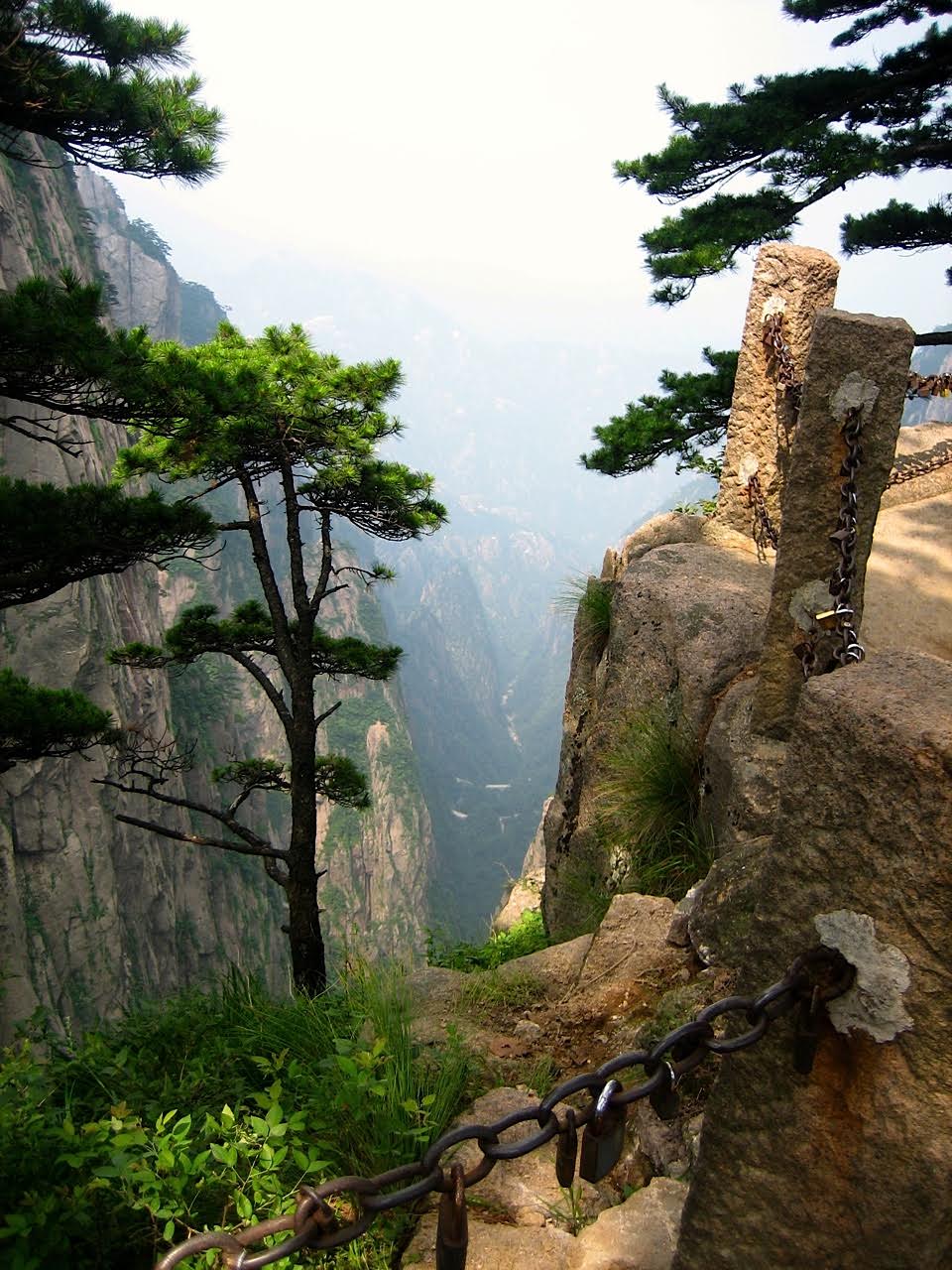
huangshan2

The Chan teacher Yaoshan was well known in the province of Jiangxi, although he rarely left his monastery. The governor of the province, a neo-Confucian called Li Ao, had heard that perhaps the Chan people knew something. He decided to visit.

So he changed out of his official garments and made his way to the monastery on foot. Despite his precautions, all along the route the mayor of each city and village headmen would come out personally to greet him with an entourage to welcome the arrival of this important official.

Finally Li Ao made his way up the mountain and was shown into Yaoshan’s room.

The master was facing away from him, reading a classic text by the light of the window. Li Ao could see the Yaoshan was tall and thin, almost emaciated from his vegetarian diet. Li Ao stood silently behind him, but the master did not turn. Finally the young monk attendant cleared his throat and said ‘Master, the provincial governor is here.’

‘Unh,’ Yaoshan said, appearing both to hear, and not hear, what had been said.

Li Ao’s ire rose, and turning away, he said ‘Hearing the reputation is not as good as seeing for oneself.’

Yaoshan let him walk a few steps, and then said ‘Governor, why do you slight the eye in favor of the ear?’

Li Ao got a shock, and turning back begged forgiveness. Then he asked ‘Can you tell me about the Dao?’

Yaoshan looked at him, then pointed once upward and once downward.

He paused, then asked ‘Do you get it?’

Li Ao, realising the master was the real thing, shook his head.

Yaoshan pointed upward again and said ‘Clouds in a clear sky.’

He pointed downward and said ‘Water in glass.’


Li Ao later wrote a famous poem enshrining the incident:

练得身形似鹤形,千株松下两函经;

我来问道无余说,云在青天水在瓶。

Practice made him resemble a crane;

Two classics held in a forest of pines.

I asked the Dao, and he wasted no words:

‘Clouds in a clear sky, water in glass.’

Again, Farewell — a Tang poem by Yu Xuanji

moutains in Taiwan copy

水柔逐器知難定,

雲出無心肯再歸。

惆悵春風楚江暮,

鴛鴦一隻失羣飛。


Water, being soft, seeks holding; 

But knows it won’t last.

Clouds disperse, and lack heart to return.


The spring day is over now, for this river; 

And the rueful wind goads

A widowed duck, lost amidst the sky.


This is the second poem that Yu Xuan-Ji entitled ‘Farewell,’ the first was published in the previous post, where the motif of dispersing clouds also appeared.

This subsequent poem is less intensely personal, and more abstract and philosophical: Yu writing about the same relationship perhaps after the passage of time. ‘Water seeking a vessel’ is a very Daoist image, as the Dao will flow into any receptive container; but the flow of attraction is very similar, and similarly impermanent—unless there is a heart. The clouds which disperse in both poems show Yu’s perception that ‘a lover’ is not just a body, but a total ambient presence of ideas and feelings and fragrances and visuals and more; unless ‘clouds’ can coalesce around a ‘heart’, they must disperse, with no return.

At the ‘turn’ of the poem, where the images change, we get the feeling that Yu is the river here, flowing within the banks of herself; the word chŭ 楚 (translated here as ‘goad’) is usually left out of translations of this poem, as the modern definitions do not seem to fit. But in ancient Chinese 楚 meant ‘thistles’ or ‘a handful of thistles used as a whip’. So while in the first poem her ‘wild moth’ of desire still fluttered dangerously around the lamp of love, even as that lamp faded and failed, here the full painful effect of these feelings torture her, she who is also the lone duck, the bereaved survivor of a pair of mandarin ducks, who in legend mate for life. The spring wind, by the way, is that which breaks up ice, dissolving connections.

(translation and comments by Steve Clavey)

Farewell — a Tang poem by the Daoist Yu Xuanji

Sunset in Taiwan

送别

秦樓幾夜愜心期,

不料仙郎有別離。

睡覺莫言雲去處,

殘燈一醆野蛾飛。


Those nights of pleasure at the pavilion –


         I never thought you could leave.


But clouds disperse, wordlessly,


         And I sleep alone;


still, around the wicked lamp, now fading,


         a wild moth flutters.


Yu Xuan-Ji (魚玄機) defies easy categorization. She was born in the Tang dynasty around 844 and died around 871, at the age of twenty-eight. Those 28 years however were a life lived to the fullest imaginable: she was well-educated, extremely intelligent, and consorted with a number of the famous poets of the Tang dynasty. The second wife of an official, she was driven away by the jealousy of the first wife, and apparently became a courtesan to survive; this in fact exposed her to the widest variety of culture and life. All of this is reflected in her poetry, of which we have 50-some poems still extant, and in which she explored not only a spectrum of metre and style, but what it means to be human. She was erudite yet plain, visual yet thoroughly versed in the language of the heart, and fearless in her political criticism.

Learning Sword Technique from the Adept Huo Long

“Learning Sword Technique from the Adept Huo Long”

Lü Yan, Complete Tang Poems

《得火龍真人劍法》    呂岩

昔年曾遇火龍君,一劍相傳伴此身。天地山河從結沫,星辰日月任停輪。

須知本性綿多劫,空向人間曆萬春。昨夜鐘離傳一語,六天宮殿欲成塵。

Long ago, meeting the Noble Fire Dragon,

He passed on a sword, my constant companion.

With it, heaven, earth, water and stone evanesce and dissolve;

Sun, moon, stars and planets cease to move.

Recognize that essence is stolen continuously. 

Be empty towards the world of men,

And each day will be a springtime.

But last night, Zhongli passed on this saying

And all the palaces of all the worlds

Fell to dust.


Lü Yan (,呂岩, 798 – ?, commonly known as Lü Dong-Bin吕洞宾, or Ancestor Lü 呂祖) was a Daoist patriarch in the late Tang dynasty. He was variously known as the “sword immortal”, the “drunken immortal” and the “poet immortal”. Indeed, some 200 of his poems are collected in the Complete Tang Poetry (Quan Tang Shi), and this is one of them, describing his legendary sword.

He learned the art of internal alchemy from Zhongli Quan, and according to the Song Shi (a history of the Song dynasty), Lü lived well past 100 years of age, with the complexion of a child and a light agile step. This was long enough for legends about him to spread widely even during his lifetime. He laughed about one story, and said “People say I have a flying sword to kill people. I can only answer by saying that [everyone knows that] those with compassion are Buddhas. But Daoist immortals are like Buddha too; how could we have swords to take human life? I do have a sword, but it is different to the usual: first it cuts off greed, then it cuts off desire, and finally it cuts off all mental disturbance. That is my triple sword-play.”