Tag Archives: yang sheng

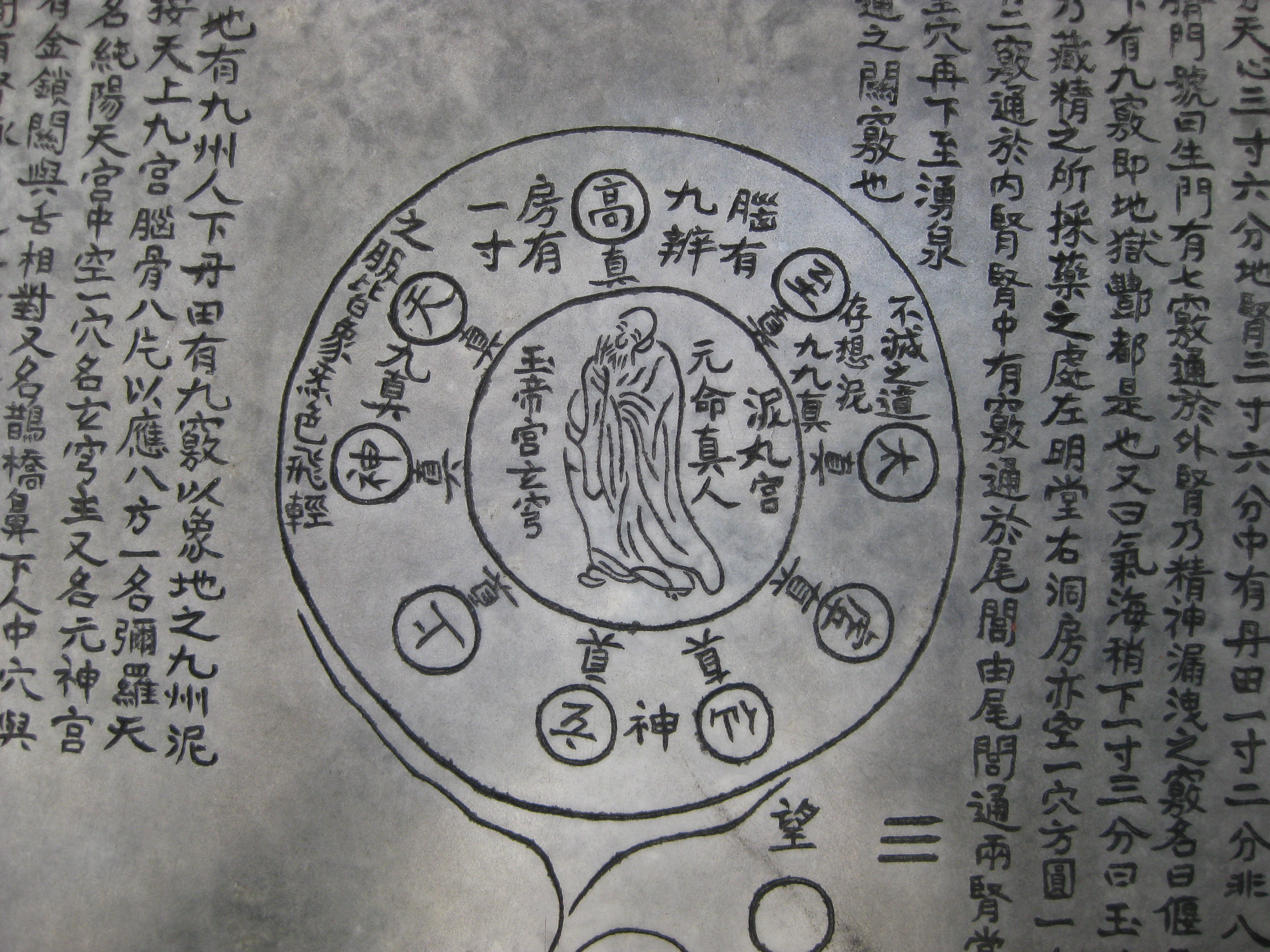
Huang Yuanji comments on Laozi Chapter Six (“The Valley Spirit Does not Die”)

(excerpt)

If people want to refine elixir to attain the Way of long life and eternal vision, there is no path without this mysterious female. Is this not the root of heaven and earth?

When practitioners lower their eyelids and turn the light around to become like Hundun– undifferentiated wholeness without knowledge–it causes the ordinary mind to die. Suddenly there is a feeling and a movement, activating unified awareness. 

This gives birth to the mind of the Way. This is what is meant by being the original spirit in stillness, and becoming true intent in action.

Once foetal breathing moves, do not keep intensely fixated on the Dan Tian. Be poised neither inside nor outside while observing its ascent and descent, coming and going. Relaxed and lively, you can then attain true foetal breathing.

The Art of Living and the Game of Go

Yang sheng is not just about physical or breathing exercises, it is cultivating the art of living in all its rich variety and interest. Underneath all of that rich variety, however, is a unity of being that is ultimately supportive and nourishing; most traditional societies know this, and are structured to develop this understanding over the course of a life.

I remember one day back in China when I was young, I heard three teachers of completely different disciplines use the same words to describe what they were doing. At a morning taichi class, the teacher said “Your qi must reach the tip of the sword, just as if it were reaching the tip of your finger!”
At noon, the calligraphy teacher insisted “Don’t just hold the brush in your hand – the qi must flow through and reach through the brush into the ink!”
And later I heard an acupuncture teacher explaining to a beginner: “Stand properly! Your intent must pass into the needle, and your qi must flow to the tip of the needle. Only then can you rectify the qi of the patient!”

That was when I realised that the whole of Chinese traditional society was designed to foster an understanding of fundamental cosmic principles, learned by experience, and by different experiences in different disciplines. The goal of this was to produce a complete person, a real human being.

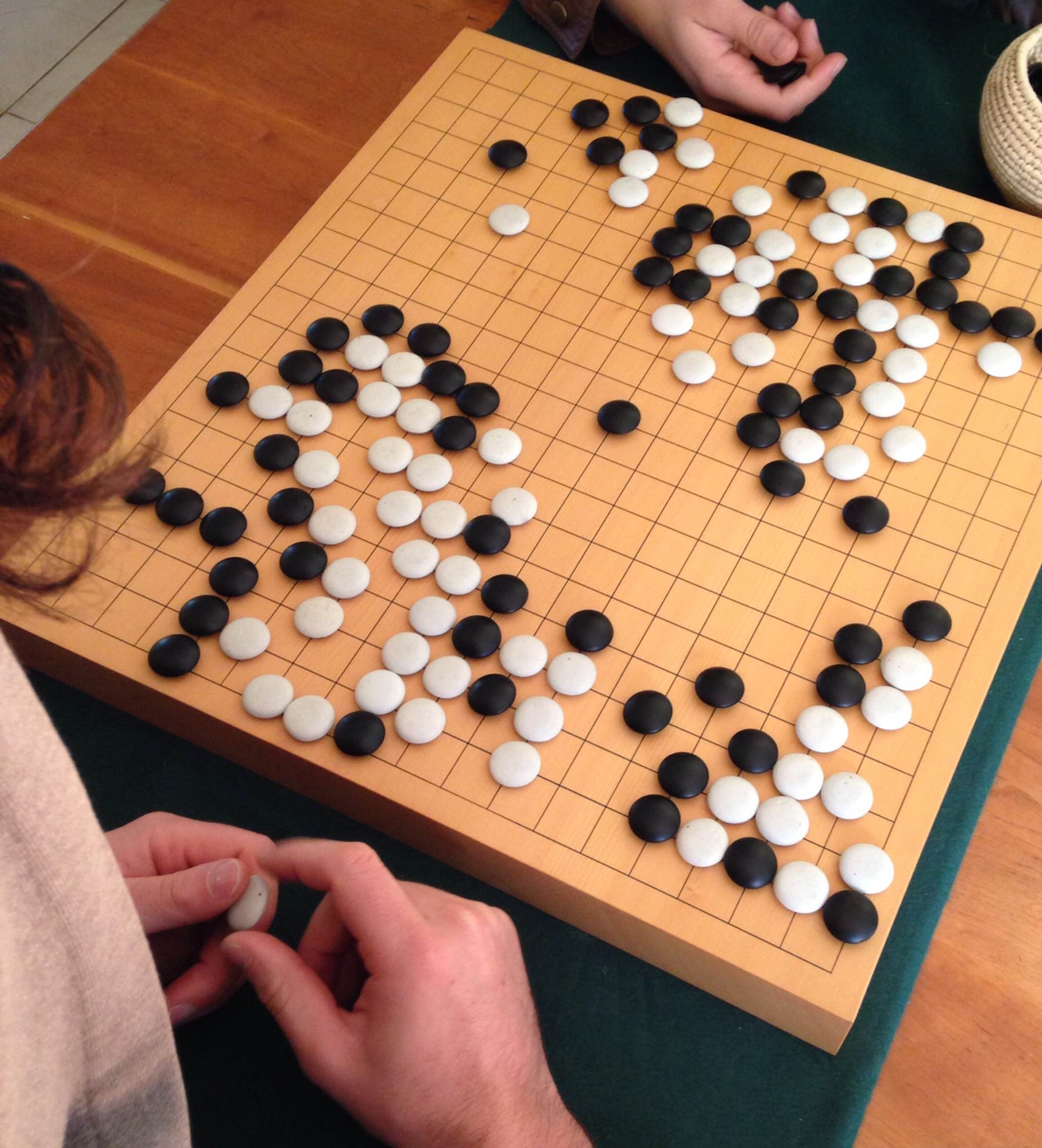
A gentleman (and many women) in traditional China would learn music, calligraphy, painting and the game of Go — in Chinese, “Wei Qi” or “surrounding chess.” Qín qí shü hùa were the four arts of the cultivated person, literally “zither, chess, writing and painting”. All of these arts introduce different facets of the same cosmic principles.
Let us take the most apparently trivial: the game of Go …

Art of Living and Weiqi
Click for complete article pdf (no charge, no sign-up, no nothing: just the article).

Go board

Ba Duan Jin on the bed

Eight Sections of Brocade is a traditional Daoist health maintenance program reputedly created by Zhongli Quan in the Tang dynasty more than 1000 years ago. Over that thousand years it has spread widely among the people, and has a variety of movements, some standing and some sitting. In the past two posts a common version of the standing movements was introduced, and here we will complete the routine with the sitting movements, which are actually a form of self-massage the Chinese call dry bathing.

If the room is warm enough, it is best to wear as little clothing as possible. One can sit in a chair or on the bed, or the floor if warm. Throughout the exercises the mind should remain (or be gently returned to) the area of the umbilicus, and one begins with three gentle deep breaths, then rub the hands vigorously together – especially the palms – for a full minute. Once the palms are warmed, the massage can begin.

Head, neck, eyes and nose
Rub the warm palms very gently over the skin of the face in circular motions, then use the fingertips to rub backwards through the hair at the sides of the head nine times, ending by rubbing the back of the neck and the area around Fengchi (GB-20) at the base of the skull with the fingertips. Use the sides of the thumbs to rub outward along the eyebrows from the point between them (Yintang) nine times, then the thumbs massage the temples (Taiyang) clockwise nine times, then counter-clockwise. Finally rub up and down alongside the nose, at the point Yingxiang (LI-20).

Teeth and tongue
Now, instead of the hands, use the tongue to massage the gums both inside and outside of the teeth, circling all over the mouth. The saliva that gathers should be held in the mouth for the space of a deep breath, return the mind to the umbilical area, and swallow the saliva. Very lightly chomp together the upper and lower teeth 18 times.

Sounding the Drum of Heaven
Rubbing the palms together again until warm, put the palms over the ears, with the fingers pointing backward. Place the index finger on top of the middle finger, then flick it downward to strike the skull, creating a deep drum-like sound, 36 times. After this rub fingers behind the ears up and down nine times, then rub the ears themselves.

Rubbing arms, shoulders, back and chest
Slide the palm forcefully up the inside of the arm, over the shoulder to the neck, and down the outside of the arm nine times, then repeat on the other arm. Rub the palms together until warm again and, with fingers pointing down, rub up and down the lower back until the area is warm and you have raised a light sweat doing so. Then massage the flanks and chest with circular motions.

Chafing the well of eternity
Roughly rub the legs all over, from top to bottom and back again, then place one foot on the knee and rub the point Yongquan (K-1) on the centre of the sole 81 times before shifting to the other foot and repeating. Rub lightly between the toes with the fingers once or twice.

Two palms warm the Cinnabar Field
This can be done sitting, standing or lying down. Placing one palm over the back of the other hand, gently rotate the hands over the lower abdomen 18 times, then reverse the direction and do it again. One should by this point feel an utterly delicious feeling of tingling relaxation throughout the whole body. Lying down to sleep, one can concentrate the qi that has been generated by lying on the back, and placing the hands over the spot on the body where the breath naturally reaches – for some this will be the chest, for others the upper abdomen, for some the lower abdomen. The sleep that follows this routine is extremely beneficial and refreshing, and long-term practice will demonstrate why Daoists were often called ‘Immortals’ – they never seemed to age!

IMG_8162

Ba Duan Jin — the Eight Sections of Precious Brocade

An ancient series of Daoist yang sheng exercises, passed down since the Song dynasty 800 years ago, is the Ba Duan Jin–the Eight Sections of Brocade–so named due to their precious effect on health. The earliest reference that I have found so far is a book called The Pivot of Dao (Dao Shu) which contains the sitting postures of Ba Duan Jin. Designed to be simple enough for children to learn, and gentle enough for old people, the series consists of eight associated exercises that stretch and strengthen the body from top to bottom.
The movements also have the intention of opening the acupuncture channels in the body, including the eight extra channels: the movements often include repeated running of the hands over the pathways of the channel for this purpose.

The mnemonic ode for Ba Duan Jin is as follows:

Both hands support the sky, to benefit the San Jiao,
Left and right open the chest, like holding a bow,
Regulate the Spleen and Stomach by lifting one hand,
Look backward to treat the Five Exhaustions and the Seven Injuries,
Wag both the head and the tail to eliminate Heart fire,
Punch and stare furiously to increase energy and strength,
Facing upward then bending the body over makes the Kidneys and waist firm,
Support the back, then seven jolts dissolve the Hundred Illnesses.

Ba Duan Jin part one links to a pdf with the first four exercises including a photo of each movement.
Ba Duan Jin part two links to a pdf of the last four exercises, with a quote from Thomas Cleary regarding its history, explanations of the final four movements, and photographs.

There is a difference between qi gong (‘breath work’) and exercises like Ba Duan Jin, which are yang sheng (nourishment of life) exercises. Yang sheng movements maintain and promote general health, which includes a good qi flow through open channels and collaterals, whereas qi gong concentrates on building a qi sensation, often in the Dan Tian (Cinnabar Field–a point located in the centre of the lower abdomen) then allowing it to circulate.

As a reward for those who have read this far, I will pass on the greatest secret of nourishing life, which I learned from my teacher Wang Ru-Zheng many years ago. The secret, he said, will look like no secret at all to those not ready to hear it, but it is the basis not only for yang sheng, but also for all healing, learning, spiritual studies and even financial investment. And here it is:

A little bit every day accumulates.

Fragrant shower

Several readers have taken me to task for, they said, being too negative. Surely health is not just about avoidance? Surely what we do is more important than what we don’t do?
I can understand  their point  of view: doing exercises to nourish  life is far more interesting than stopping up the leaks, as crucial as this is. It does put me in mind, though, of an old story told in the far west of China, in Chinese Turkestan, a tale of Afanti — the Effendi — who was either extremely wise or extremely foolish; no one could tell which.

It seems that one day Afanti was standing at the pump in the public square, pumping water into a pitcher in his hand. This went on for some time, until one of the gathering onlookers said to him: “Afanti! You will never fill that pitcher, for it has no bottom!” Afanti looked at him indignantly and said, “I am not interested in the bottom of the pitcher, I want to fill it to the top, and so I am looking at the top. Don’t distract me with irrelevancies about the bottom!”

Now that I have had my say, however, a useful technique is described in a number of traditions such as the Daoist and the Zen streams, and probably others of which I am unaware. The aim is to systematically melt away tensions in the body and mind.

The technique
Sit in a comfortable position. Standing is also possible, but is best done in the posture used at the beginning of a Tai Chi set, before any movement takes place. If you do not know what this means, better sit. Once practised with the technique, it can be done in any posture.
Now visualise a slow stream of comfortably warm and fragrant sesame oil flowing very slowly and gently down from the top of your head, dissolving any point of tension it may encounter. At first the warm fragrant liquid slowly covers every part of your head and face, melting away the tensions in your forehead, nose, eyes, ears and jaw, dissolving knots at the base of your skull and in your neck, and then pouring warmly down over your shoulders and back and chest, melting and dissolving as it goes. Its fragrant warmth then gathers briefly in the pelvis and hips before moving on into the buttocks, thighs and knees, down through the shins and calves, into the feet, where it pours into the ground.1

There are two important  points: one is that you begin to gently dissolve from the surface of the body, and over time extend this into the interior so that the organs are washed with the gentle warm fragrance of the melting sesame oil. The second is that throughout the exercise you maintain a gently straightened back and do not slouch, so that while everything is melting and pouring downward, there is still an upright centre (this is particularly important if one has low blood pressure). The effect is very much like the Tai Chi ideal: utter relaxation and flexible movement around an upright but not rigid centre.

This is an excellent prelude to a period of meditation or Tai Chi, but balance is the key: no exercise should be overindulged. It has been said that a technique like this, which is very “opening”, is best done when and where the surrounding environment is natural, supportive and beneficial, in order to absorb only the best influences. Similarly, it should not be done just prior to sleeping, but an interval allowed for the everyday self to regroup its usual — but much more relaxed! — self-image.
Another outstanding aspect of Daoist yang sheng exercise is the slow, gentle and deliberate stretching of all the major tendons in the body. Important  at any age, it becomes crucial as one gets older, as tendons stiffen and lead to imbalance throughout the structure of the body. Mindful breathing is often coupled with the slow and gentle stretching, which further relaxes the body in depth.

An excellent series of exercises for achieving this will be described in the following post about Ba Duan Jin.

Endnote

1. More on this technique can be found in the following two books: a detailed technical description in B. K. Frantzis’ Opening the Energy Gates of The Body (North Atlantic Press, 1993) and a more personal and warmer description in Wild Ivy: the spiritual autobiography of Zen Master Hakuin by Norman Waddell (Shambala, 2001).