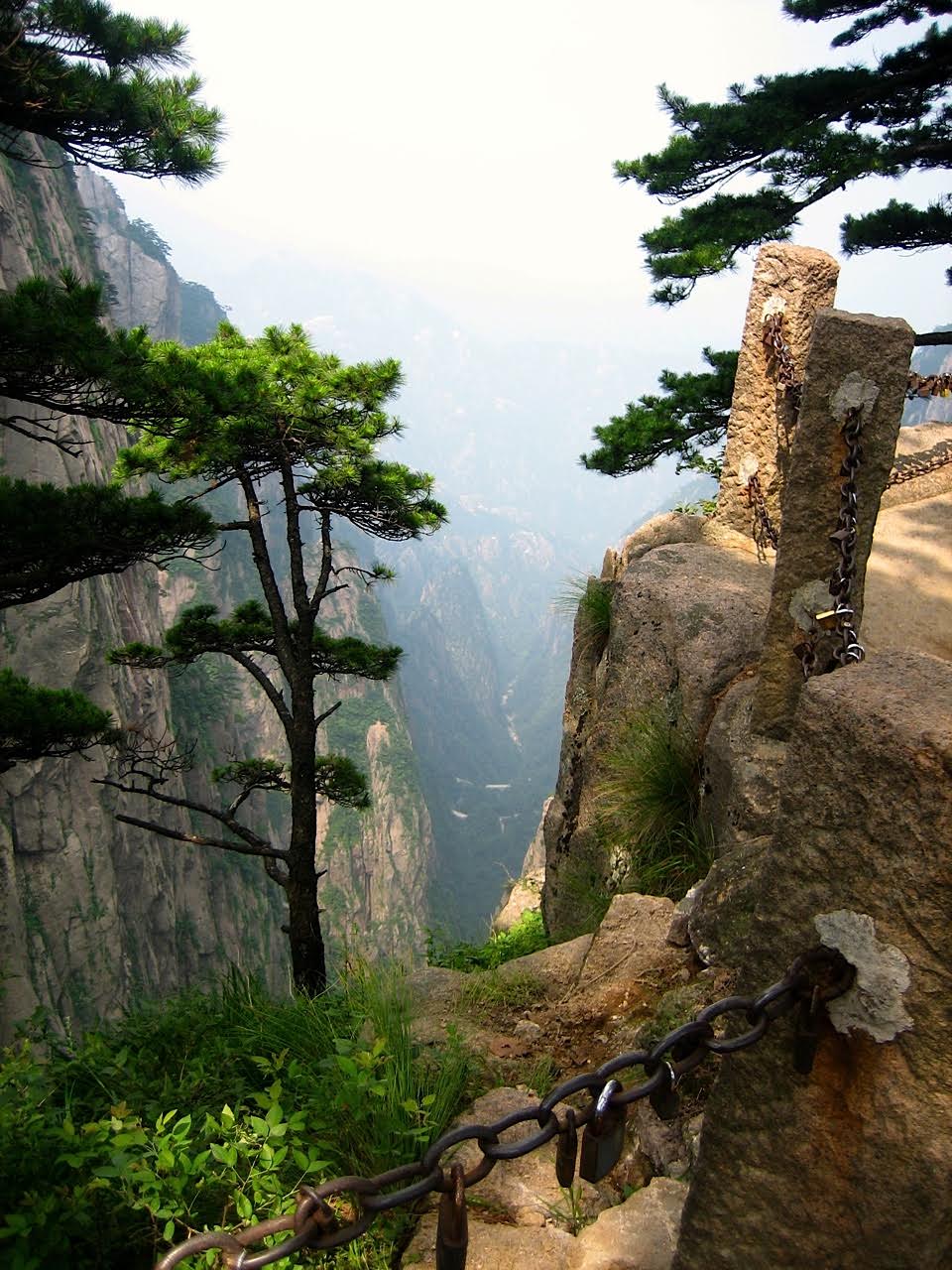
The Chan teacher Yaoshan was well known in the province of Jiangxi, although he rarely left his monastery. The governor of the province, a neo-Confucian called Li Ao, had heard that perhaps the Chan people knew something. He decided to visit.
So he changed out of his official garments and made his way to the monastery on foot. Despite his precautions, all along the route the mayor of each city and village headmen would come out personally to greet him with an entourage to welcome the arrival of this important official.
Finally Li Ao made his way up the mountain and was shown into Yaoshan’s room.
The master was facing away from him, reading a classic text by the light of the window. Li Ao could see the Yaoshan was tall and thin, almost emaciated from his vegetarian diet. Li Ao stood silently behind him, but the master did not turn. Finally the young monk attendant cleared his throat and said ‘Master, the provincial governor is here.’
‘Unh,’ Yaoshan said, appearing both to hear, and not hear, what had been said.
Li Ao’s ire rose, and turning away, he said ‘Hearing the reputation is not as good as seeing for oneself.’
Yaoshan let him walk a few steps, and then said ‘Governor, why do you slight the eye in favor of the ear?’
Li Ao got a shock, and turning back begged forgiveness. Then he asked ‘Can you tell me about the Dao?’
Yaoshan looked at him, then pointed once upward and once downward.
He paused, then asked ‘Do you get it?’
Li Ao, realising the master was the real thing, shook his head.
Yaoshan pointed upward again and said ‘Clouds in a clear sky.’
He pointed downward and said ‘Water in glass.’
Li Ao later wrote a famous poem enshrining the incident:
练得身形似鹤形,千株松下两函经;
我来问道无余说,云在青天水在瓶。
Practice made him resemble a crane;
Two classics held in a forest of pines.
I asked the Dao, and he wasted no words:
‘Clouds in a clear sky, water in glass.’

 The Fat Monk
Pingback: Nan Huai-Chin discusses Zhuge Liang’s “Letter to my Son” | The Fat Monk
Thank you for the story and I was wondering if you could say any more about how to engage with Li Ao’s poem.
When I either remember or am reminded of zen poems like this, after the usual feeling of being a bit perplexed, I often find myself engaging in trying to rationally “figure it out” through thinking about possible symbolism, different interpretations, etc. However, recently it struck me that even if I was able to ‘deduce’ the deep meaning of the poem, it feels unlikely that that type of understanding would result in much growth anyway.
How should a person engage with poems or teachings like these so that it becomes practice and effects at us a heart level, not just a mental level?
Different times, different places, different people mean different answers.
Nasrudin claimed that he could produce an apple straight from heaven. Someone called his bluff, and Nasrudin pulled an apple from his pocket.
“Here you go,” he said, proffering it.
“But this apple has a worm in it!” said the outraged challenger after examining it. “How can this be from heaven?!”
“Simple,” said Nasrudin. “This apple is indeed from heaven. But once it fell into this abode of corruption, it had no choice but to become part of its surroundings.”
Zen has what they call 死句 dead phrases and what they call 活句 living phrases. The latter arise from insight and while they are spontaneous they also reflect a greater reality and can spark increased insight in those who are attuned in the moment. Dead phrases are often past living phrases that no longer spark insight because they have been made into fetishes, cliché or totems.
If something is offered to spark insight and–for whatever reason–it doesn’t, there is no use obsessing about it or wrinkling the brow trying to figure it out. Let it go and clear your mind. Take some time and look within. Insight needs, in fact, sight in.
When one has that attunement in the moment, everything around you is a 活句.
Rumi said “The alchemy of the elect is to turn lead into gold, and it is wonderful. But even more wonderful is the alchemy of the masses — which is to turn gold into lead, and they do it every minute of every day.”
Laozi chapter ten asks, describing certain qualities of that “attunement”:
天门开阖, 能为雌乎 When the doors of heaven open and close, can you be as receptive as a female?
明白四达, 能无知乎 When you can know everything clearly, can you stay without knowledge?